

OpenAI vs. Google: The Agentic Shopping Format War Is Already Here

It’s been only a couple of weeks since Agentic Shopping upset the whole e-commerce world, but its respective format war, the “ACP” versus “UCP,” is already here. Many compare it to the VHS–BetaMax war of the ‘70s and ‘80s, which ultimately was won by VHS, because it understood what people wanted better. What’s the fight about this time between the OpenAI and Google-led standards?
Google and Shopify just announced their Agentic Shopping solution, the Universal Commerce Protocol, or UCP for short. With co-developing UCP, they’re actively challenging OpenAI’s Agentic Commerce Protocol, or ACP, just a couple of weeks after it was announced. As of now, both solutions are only available in the US and have somewhat limited supporting merchants, with no firm dates for expansion. That, however, will certainly change, so it’s time to look into the key differences and understand which one to pick.
Quick Payment or the Whole Customer Journey?
Although the two solutions share some similarities, there’s a fundamental difference in their approach to agentic commerce. Namely, Google is focusing more on the whole customer journey and shopping experience, rather than “just” making the checkout process easier.
With its entire ecosystem and significant e-commerce experience, Google is well-positioned to deliver a seamless experience from product discovery to delivery. This modular suite of functions includes: searching, stock monitoring, payment, delivery tracking, returns, and even loyalty programs. These functionalities require deeper integration with the merchant’s system–no wonder they co-developed the solution with the e-commerce powerhouse Shopify.
What’s more, Google can use deeper integration with the user’s data as well. They also announced Personal Intelligence, a service that connects various services to Gemini. They’re demoing this with the following example: a user asks what tires they need for their car, and they get an answer based on their own (connected) Photos app. It’s easy to see how this can be a personalized selling opportunity for Google.
OpenAI’s, or colloquially, ChatGPT's solution is more streamlined than Google’s. Their primary focus is helping the merchants make the deal through Instant Checkout via ChatGPT (or any other compatible chatbot). True, they can and will help users with product discovery through their famous natural language chats, but their solution, at least for now, will be less integrated with merchants’ systems.
There seems to be a slight edge in capabilities for Google’s solution, but that could also mean greater implementation complexity.
Walled Gardens: Where Can You Use Them?
As far as we can tell, both Google and OpenAI will try to keep users within their own walled gardens. This means there’s a high chance that at least part of the traditional customer journey/funnel will shift from the merchant to the AI model's creator. Search and purchase history might be more closely tied to the facilitator, and merchants might focus more on fulfilling orders.
OpenAI’s ACP will be available in ChatGPT and in every compatible client, but it will likely get most of its traffic from ChatGPT itself or from solutions that use its models directly. That makes a lot of sense for OpenAI, because, as far as we know, they’re going to take a cut of every sale made through their checkout solution. Hence, OpenAI is highly motivated to keep most sales flowing through its system.
In some ways, Google will have an upper hand over OpenAI: it has a robust ecosystem through which it can push UCP to users. Namely, it will be available in their AI client, Gemini, and results will also appear in search results and might be integrated into Chrome as well. This is a massive benefit for reaching users and also a chance for Google to keep earning ad revenue, which has been its primary source of income until Agentic Shopping challenged traditional online advertising, as we discussed in our original post on the topic.
Open Source or Open Source-ish?
Another key difference here is the openness of the standard. On paper, both UCP and ACP are open source solutions, but there is a key difference. OpenAI’s ACP can be implemented by anyone and is based on Apache 2.0. UCP is also fully open, but it is closely connected to Google’s and Shopify’s ecosystems, and they will likely retain a strong influence on how the solution works.
So far, this is very similar to what Google did with its Chromium browser (the base for Chrome) and the Android operating system. Both are freely available to anyone, but some restrictions apply. (Android, for example, can be modified, or “forked”, by anyone, but they might lose access to the Play Store and other Google services).
All in all, open source sounds great and might bring wider availability, but both companies will focus on their own benefits and making the most of their solutions.
Who Will Win? Use Both Agentic Solutions For now
It’s hard to say which solution will win at this point. To go back to our (slightly obsolete) example, the VHS vs. Betamax format war was decided by what users wanted. VHS offered better recording times, and that’s exactly what people wanted at the time. We will have to wait and see what users want in this case: quick shopping or a fuller experience. Maybe both solutions have a place on the market, and neither will have total domination.
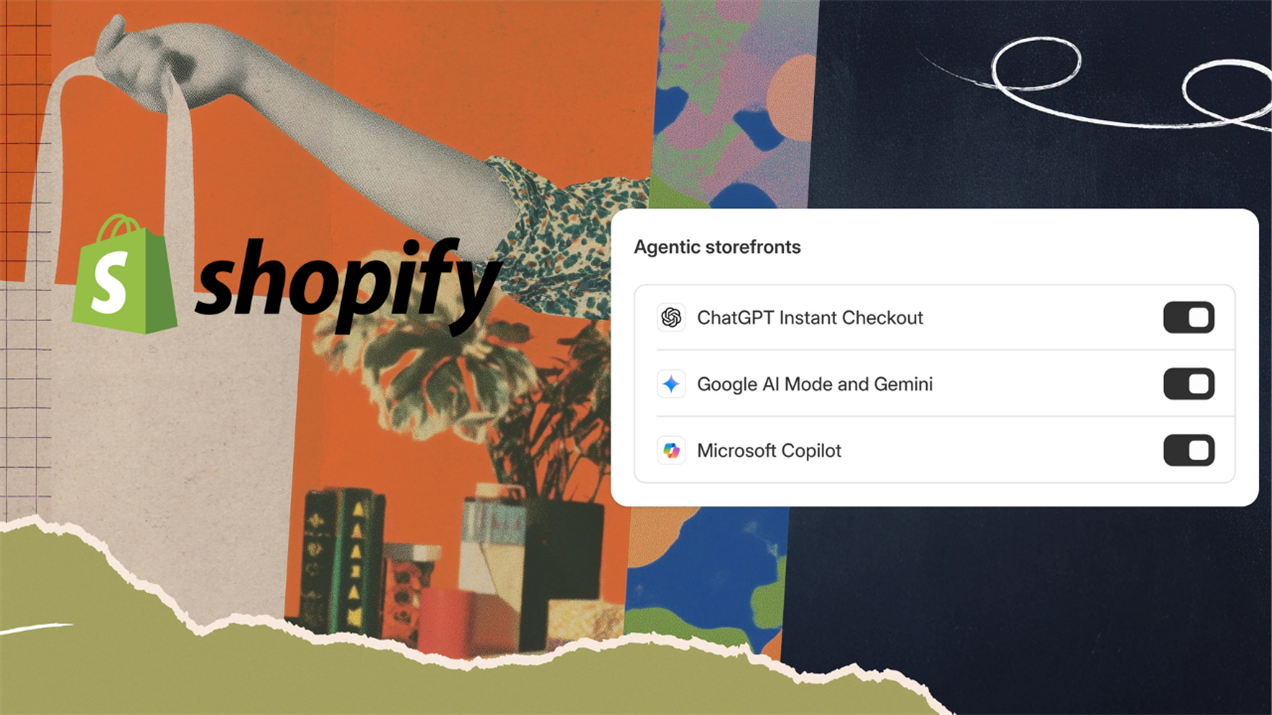
What’s telling, however, is Shopify’s behaviour. As we mentioned, UCP was co-developed by Google and Shopify. The latter, however, was advertising its collaboration with ChatGPT very recently when OpenAI introduced its agentic shopping solution. They also made a big deal out of ChatGPT and their Agentic Storefronts solution in their latest Winter Edition, dubbed RenAIssance. Yet now they’re stepping into the limelight as a co-developer for Google’s solution, which must have been in the works for a long time.
To us, this means that Shopify wants to stay open to all possibilities and will optimize its engine for every agentic solution. Why? Because they know that the more places they are available, the better their chances are of keeping their historically high conversion rates up and making their clients happy.
At Color and Code, we believe that, at this point, merchants should do the same: in addition to having a well-set-up e-commerce store, optimize for and use all available agentic solutions, because that’s how they will reach the most people and make the most of their sales.
Related posts

Related posts

We Are Looking for Clients Who Are Ready to Level Up - Announcing Strategic Partnership with msg Plaut

ICYMI: The biggest (Shopify) news of the year so far
Shopify Exec: The merchants who are ready for AI will have a significant advantage over those who aren't
Why do we recommend Shopify?
Shopify is one of the most scalable, feature-rich, and fastest-growing e-commerce platforms. Trusted by over one million e-commerce businesses in 175 countries worldwide, it provides the tools and flexibility needed to succeed in the digital marketplace.


Ideal solution for both Small and Large Businesses with high traffic